For many virtual care programs, the moment that matters most to a patient is not the video visit. It is the day the medication arrives. If a prescription is delayed, filled incorrectly, or stuck in a refill loop, the patient experiences the whole service as broken, no matter how good the clinical care was.
Telehealth pharmacy fulfillment is the set of processes that move a prescription from a clinician’s decision to a patient’s door. It includes e-prescribing, pharmacy selection, verification, dispensing, shipping, refills, and the communication that keeps patients informed along the way. It also carries real regulatory weight, because pharmacies are licensed by states, compounding is governed by federal law and FDA policy, and controlled substances add another layer of rules.
This guide explains how fulfillment works in a virtual care model, the main pharmacy options available, and the operational and compliance questions operators should answer before launch. It is written for telehealth founders, medical groups, and brands that offer prescription-based service lines, and it approaches the topic as an operating problem: how to make fulfillment reliable, transparent, and compliant at scale.
What Telehealth Pharmacy Fulfillment Includes
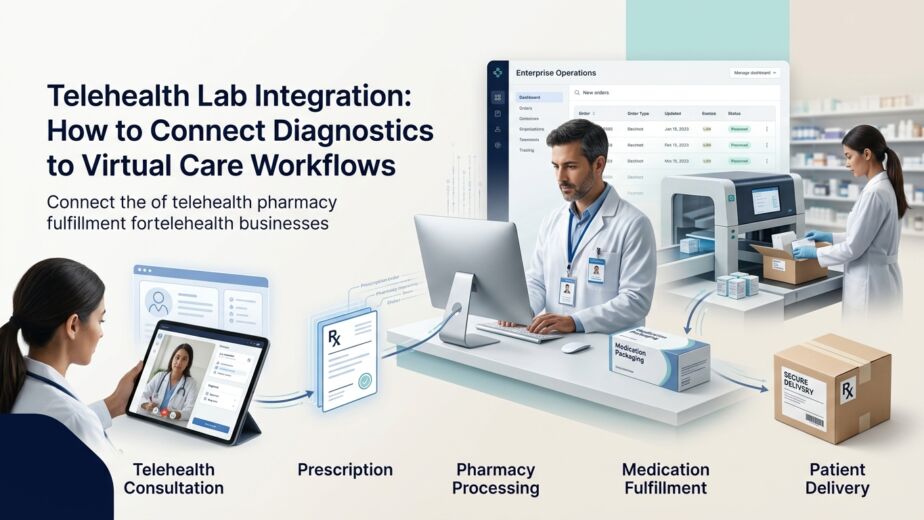
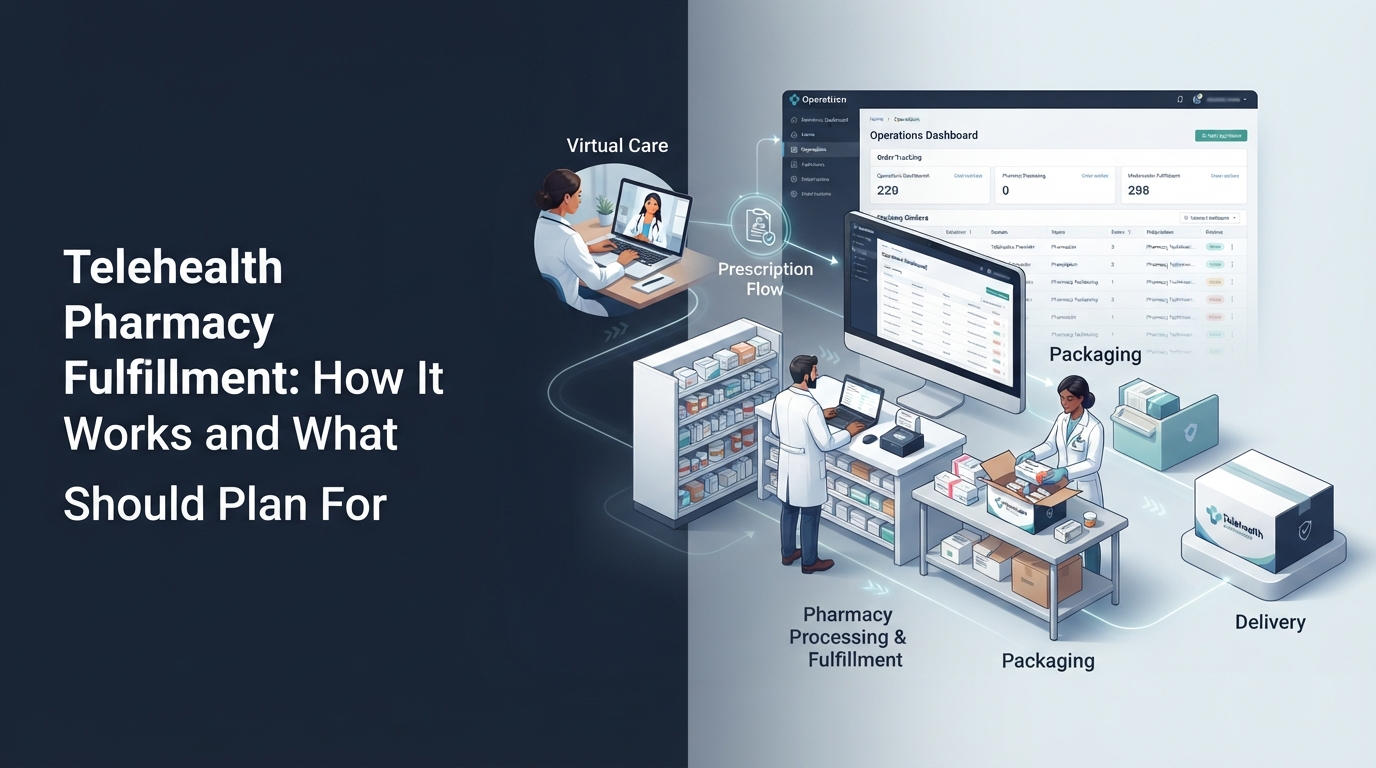
Fulfillment begins after the treating clinician decides that a prescription is appropriate. From there, several steps must happen in sequence:
- E-prescription transmission: the clinician sends the prescription electronically to a licensed pharmacy.
- Order intake and verification: the pharmacy confirms patient details, prescription accuracy, and any clinical checks required by law and pharmacy practice standards.
- Pharmacist review: a licensed pharmacist reviews the prescription, including potential interactions and appropriateness.
- Dispensing: the medication is prepared, labeled, and packaged.
- Shipping: the order ships to the patient, with temperature control when required.
- Status communication: the patient receives updates on processing, shipping, and delivery.
- Refills and renewals: ongoing therapy is refilled on schedule or renewed after clinical follow-up.
Each step depends on data moving accurately between the telehealth platform, the clinician, and the pharmacy. Gaps in that data flow are the most common source of delays.
Why Fulfillment Is a Core Part of the Telehealth Model
Telehealth pharmacy fulfillment affects more than logistics. It shapes several outcomes that operators care about:
- Patient experience: fast, predictable delivery builds trust; delays generate support tickets and cancellations.
- Retention: longitudinal programs depend on refills arriving before patients run out.
- Unit economics: pharmacy costs, shipping, and failed deliveries all affect margin.
- Compliance exposure: using the wrong pharmacy type or an unlicensed pharmacy for a state creates real risk.
- Clinical continuity: refill timing and lab monitoring must stay aligned for therapies that require ongoing oversight.
Because of this, fulfillment should be designed alongside clinical protocols and patient acquisition, not added after launch.
Types of Pharmacies Used in Telehealth
Different service lines rely on different pharmacy types. Many operators work with more than one.
| Pharmacy type | Typical role in telehealth | Key considerations |
|---|---|---|
| Retail pharmacy | Patient picks up locally; useful for urgent or acute needs | Less control over patient experience; patient chooses location |
| Mail-order pharmacy | Ships commercially manufactured medications to patients | Requires licensure in each state it ships to; shipping logistics |
| 503A compounding pharmacy | Compounds medications for individual patients based on prescriptions | State-licensed; subject to Section 503A conditions and FDA policy |
| 503B outsourcing facility | Compounds larger volumes under FDA registration and current good manufacturing practice requirements | FDA-registered; inspected by FDA; specific product rules apply |
Retail Pharmacies
For acute care, such as urgent care prescriptions, sending a prescription to the patient’s chosen local pharmacy is often fastest. The trade-off is less control over stock, pricing, and patient communication.
Mail-Order Pharmacies
Mail-order pharmacies are common in direct-to-patient programs, especially for recurring medications. They allow a consistent experience across markets but must hold appropriate licenses in each state where they ship.
Compounding Pharmacies
Compounding involves preparing a medication tailored to a patient’s needs. Under federal law, traditional compounding pharmacies operate under Section 503A of the Federal Food, Drug, and Cosmetic Act, while outsourcing facilities register with FDA under Section 503B. Compounded drugs are not FDA-approved, which means FDA does not review them for safety, effectiveness, or quality before they are marketed.
Compounding can play a legitimate role, but it requires careful attention to current FDA policy, the specific substances involved, and state pharmacy rules.
How E-Prescribing and Order Routing Work
The connection between your telehealth platform and pharmacy partners determines how smoothly orders move. Common elements include:
- E-prescribing: clinicians send prescriptions electronically from the EHR or prescribing system.
- Electronic prescribing of controlled substances (EPCS): required infrastructure if your service line includes controlled medications, with identity proofing and two-factor authentication requirements.
- Order routing logic: rules that send each prescription to the right pharmacy based on medication type, patient state, and partner coverage.
- Status integrations: updates from the pharmacy back to the platform, so support teams and patients can see where an order stands.
Without integration, teams end up tracking orders through email and spreadsheets, which slows response times and increases errors. Planning these connections early is one of the most valuable investments in telehealth pharmacy fulfillment.
State Licensing and Multistate Coverage
Pharmacy regulation is largely state-based. A pharmacy that ships medication to patients in another state generally needs to meet that state’s licensing requirements for nonresident pharmacies.
When you plan market expansion, confirm three things for each state:
- Your clinicians are licensed to treat patients located there.
- Your pharmacy partners are licensed to dispense and ship there.
- Any state-specific prescribing or dispensing rules for your medications are understood.
A frequent gap in telehealth pharmacy fulfillment is launching marketing in a state before pharmacy coverage is confirmed. Patients complete visits, but prescriptions cannot be filled by the chosen partner, which leads to manual workarounds and poor experiences.
Compounding: Current Considerations for Telehealth Operators
Compounding has become a central topic in telehealth, particularly in weight loss. Operators should understand a few principles.
Shortage status matters. FDA policy allows compounding of drugs that are essentially copies of approved products in limited circumstances, including when a drug appears on FDA’s drug shortage list. FDA has determined that the shortages of tirzepatide and semaglutide injection products are resolved, and it has explained how its compounding policies apply as supply stabilizes. Programs that relied on shortage-era compounding need current legal review.
Bulk substances are regulated. FDA maintains categories and lists for bulk drug substances that compounders may or may not use. Some peptides marketed in wellness programs have been placed in categories that raise significant safety concerns. Each substance should be checked against current FDA status before it appears in a formulary.
Pharmacy type must match the activity. A 503A pharmacy compounds based on individual prescriptions and must meet specific conditions. A 503B outsourcing facility operates under FDA registration, inspection, and current good manufacturing practice requirements.
Marketing must be accurate. Describing a compounded product as FDA-approved, or as identical to a branded drug, can create serious regulatory problems.
Requirements can vary by state and service line and should be reviewed with appropriate medical, legal, and compliance professionals before launch.
Controlled Substances and Fulfillment
Service lines such as testosterone therapy, some weight loss medications, and certain sleep medications involve controlled substances. That affects both prescribing and dispensing.
Key considerations include:
- Federal prescribing rules: DEA and HHS have extended telemedicine flexibilities for prescribing controlled medications through December 31, 2026, while permanent rules continue to develop.
- EPCS requirements: controlled prescriptions are typically transmitted through certified electronic prescribing systems.
- Pharmacy obligations: pharmacists have their own responsibilities when dispensing controlled substances, including verifying that prescriptions are issued for a legitimate medical purpose.
- State rules: states may impose additional requirements, including prescription monitoring program checks and in-person exam rules.
Because these rules change, controlled-substance fulfillment should be reviewed with counsel and pharmacy partners before launch.
Linking Fulfillment With Labs and Clinical Monitoring
Some therapies should not be refilled without current lab results. Testosterone therapy commonly includes hematocrit monitoring. Weight loss and metabolic programs often include periodic metabolic panels. Certain dermatology treatments require repeat testing on a defined schedule.
A connected workflow can help:
- Lab results route into the EHR for clinician review.
- Refills are held until required results are reviewed, where relevant.
- Patients receive reminders to complete labs before their next refill is due.
- Support teams can see whether a delay is caused by labs, clinical review, or the pharmacy.
This connection between diagnostics and telehealth pharmacy fulfillment is one of the clearest examples of why virtual care works best as an integrated operation. Results used to support prescribing decisions should come from CLIA-certified laboratories.
Shipping, Packaging, and Patient Communication
Patients judge fulfillment by what they see. A few operational details make a large difference:
- Clear timelines: set expectations for processing and delivery at checkout.
- Proactive updates: send notifications when an order is received, shipped, and delivered.
- Cold chain: temperature-sensitive medications need appropriate packaging and shipping methods.
- Discreet packaging: many patients prefer packaging that does not reveal the contents.
- Refill reminders: prompt patients before supply runs out, especially for ongoing therapy.
- Exception handling: define what happens when a package is lost, damaged, or delayed.
Messages should avoid disclosing sensitive health information inappropriately, and consent rules for email and text messaging apply.
Key Performance Metrics for Fulfillment
Measuring telehealth pharmacy fulfillment helps operators spot problems before patients do.
| Metric | Why it matters |
|---|---|
| Prescription-to-ship time | Core indicator of pharmacy speed |
| Ship-to-delivery time | Shipping partner performance |
| First-fill rate | Share of approved patients who receive medication |
| On-time refill rate | Retention and continuity of care |
| Order error and exception rate | Accuracy and data quality between systems |
| Fulfillment-related support tickets | Patient friction points |
| Coverage by state | Readiness for expansion |
A drop in first-fill rate often signals a data, coverage, or pricing issue rather than a clinical one. Reviewing these metrics by state and service line helps teams find the root cause quickly.
Choosing Pharmacy Partners: Evaluation Criteria
Selecting fulfillment partners is a long-term decision. Questions to ask include:
- Which states is the pharmacy licensed to ship to, and can it provide documentation?
- Is it a 503A pharmacy, a 503B outsourcing facility, a mail-order pharmacy, or a combination?
- How does it integrate with your e-prescribing system and share order status?
- What are typical processing and shipping times?
- How are cold-chain products handled?
- How are refills, renewals, and exceptions managed?
- What inspection history, accreditation, or quality documentation can it share?
- Can it support controlled substances if your service line requires them?
Contracts should address responsibilities, data privacy, service levels, and compliance obligations, and they should be reviewed by healthcare counsel.
Building Fulfillment Internally vs. Partnering
Very few new telehealth operators build their own pharmacies. Licensing, staffing, inspections, and multistate coverage make that path slow and capital-intensive. Most operators instead partner with licensed pharmacies and focus on integration, routing, and patient experience.
A B2B telehealth operating and growth partner such as TelePartners Studio connects telehealth pharmacy fulfillment with the rest of the operating model, including patient acquisition, provider network access, and lab integration, so that network pharmacies can fill each order and ship it directly to the patient. Prescribing decisions remain with independent licensed clinicians, and pharmacy activities remain with licensed pharmacies.
Common Fulfillment Mistakes to Avoid
- Launching in states without confirmed pharmacy licensure.
- Relying on outdated compounding assumptions after shortage status changes.
- Using manual order tracking that cannot scale.
- Disconnecting refills from lab monitoring for therapies that require it.
- Setting unrealistic delivery expectations at checkout.
- Marketing compounded products inaccurately.
- Ignoring cold-chain requirements for temperature-sensitive medications.
Frequently Asked Questions
How does telehealth pharmacy fulfillment work?
After a licensed clinician decides that a prescription is appropriate, it is sent electronically to a licensed pharmacy. A pharmacist reviews it, the medication is dispensed and shipped to the patient, and refills follow on schedule. Order status updates keep patients and support teams informed.
Do telehealth companies need their own pharmacy?
Most do not. They contract with licensed retail, mail-order, or compounding pharmacies that already have state licenses, pharmacist staff, and shipping operations. Owning a pharmacy is possible but requires significant licensing, staffing, and inspection work.
What is the difference between a 503A and a 503B pharmacy?
A 503A pharmacy compounds medications for individual patients based on prescriptions and is primarily overseen by state boards of pharmacy. A 503B outsourcing facility registers with FDA, is subject to FDA inspection, and must meet current good manufacturing practice requirements. Which type is appropriate depends on the product and situation.
Can compounded GLP-1 medications still be used in telehealth programs?
FDA has determined that the shortages of tirzepatide and semaglutide injection products are resolved, which affects when compounding of copies is permissible. Any program involving compounded GLP-1 products should be reviewed with healthcare regulatory counsel against current FDA policy.
How can operators reduce delays in telehealth pharmacy fulfillment?
Integrate e-prescribing and order status, confirm pharmacy licensure for every launch state, route orders automatically, align refills with lab monitoring, and set clear delivery expectations. Tracking prescription-to-ship and ship-to-delivery times helps identify bottlenecks quickly.
Are there special rules for shipping controlled substances?
Yes. Controlled prescriptions are subject to DEA rules, EPCS requirements, and state-specific dispensing and monitoring obligations. Pharmacists also have independent responsibilities when dispensing them. These service lines should be reviewed with counsel and pharmacy partners before launch.
Conclusion
Telehealth pharmacy fulfillment is where clinical decisions become real outcomes for patients. Reliable fulfillment depends on licensed pharmacy partners in every state you serve, integrated e-prescribing and order status, careful attention to compounding and controlled-substance rules, and refill workflows that stay aligned with lab monitoring. When those pieces work together, patients receive medication on time, retention improves, and support teams spend less time chasing orders.
Operators who plan fulfillment alongside patient acquisition, provider capacity, and diagnostics build programs that scale more smoothly. If you are launching or expanding a prescription-based service line, TelePartners Studio works as a B2B telehealth operating and growth partner across patient acquisition, provider access, pharmacy fulfillment, and lab integration. A discovery call is a practical way to explore whether that operating model fits your plans.