Every virtual care company eventually faces the same question: where will the next thousand patients come from, and what will it cost to bring them in? Strong clinical care and a smooth platform mean little if the right patients never find the service. At the same time, healthcare marketing carries risks that most consumer categories do not. Claims need support, health data needs protection, and the promise in an ad must match what a licensed clinician can actually decide.
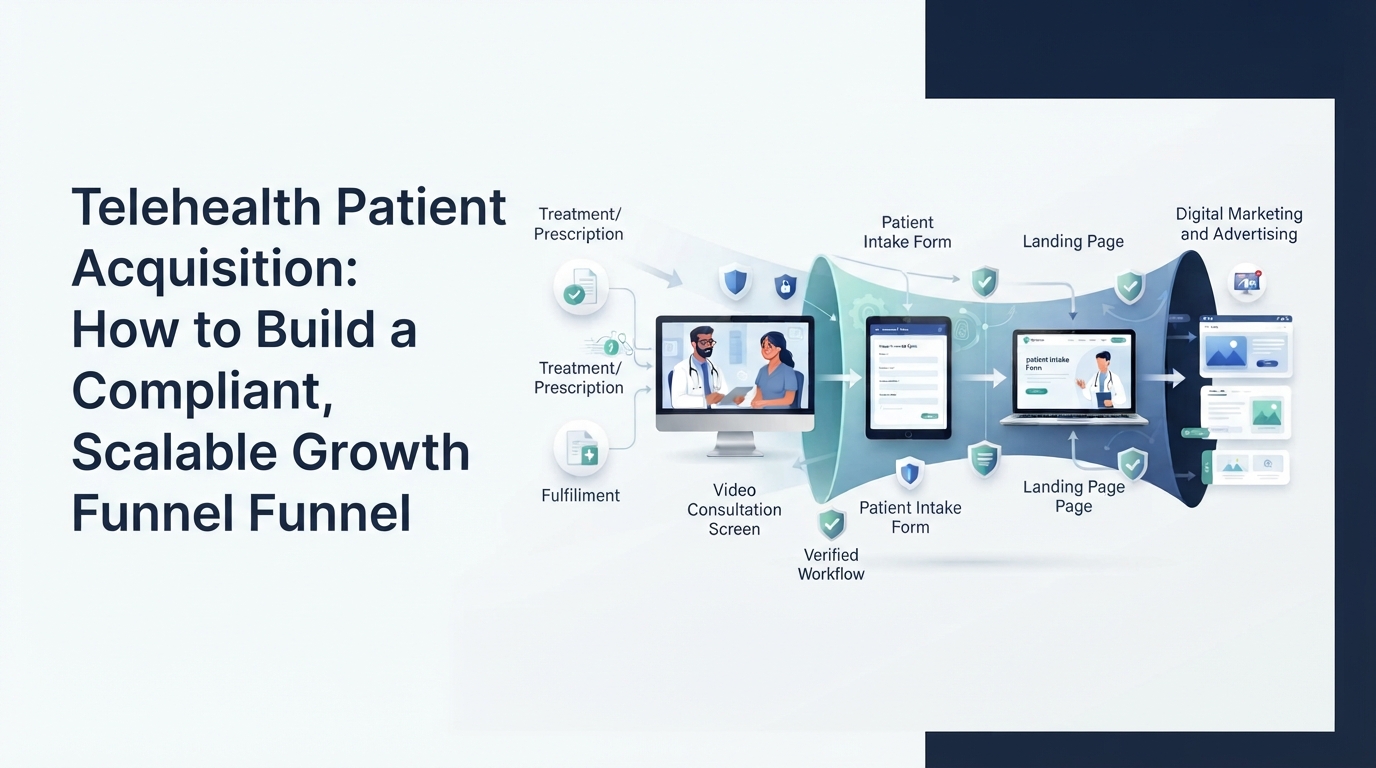
Telehealth patient acquisition sits at the center of that tension. It is the system of content, paid media, landing pages, intake flows, and follow-up that turns interest into completed visits. Done well, it produces steady, qualified demand for each service line. Done poorly, it burns budget, attracts patients who are not good candidates, and creates compliance exposure.
This guide explains how patient acquisition works for virtual care operators, from channel selection and funnel design to conversion, retention, and measurement. It also covers the privacy and advertising considerations that shape what you can say and track. The perspective is operational: it assumes you are responsible for growing a service line, not just running campaigns, and that acquisition has to connect cleanly to providers, pharmacy fulfillment, and lab workflows downstream.
What Telehealth Patient Acquisition Means
At its simplest, telehealth patient acquisition is the process of attracting people who need a specific type of care and guiding them to a completed clinical visit. In practice, it spans several stages:
- Awareness: a potential patient discovers the brand through search, social media, referrals, or content.
- Consideration: they visit a landing page, read about how the service works, and compare options.
- Conversion: they start and complete intake, pass eligibility screening, and pay.
- Care: a licensed clinician evaluates them and decides whether treatment is appropriate.
- Retention: they continue with refills, follow-up visits, or additional services.
The important shift is to measure success at the care and retention stages, not just at the click. A campaign that produces many sign-ups but few completed visits, or many visits but few appropriate candidates, is not working, even if the cost per lead looks attractive.
Why Acquisition in Virtual Care Is Different
Patient acquisition for virtual care borrows tactics from e-commerce, but the model is not the same. Several factors set it apart:
- Clinical gatekeeping: a purchase does not guarantee a prescription. The treating clinician decides independently, and some patients will be declined or referred.
- State boundaries: you can only serve patients in states where you have licensed clinicians and pharmacy coverage.
- Regulated claims: health and prescription product claims are subject to FTC and, in some cases, FDA oversight.
- Sensitive data: intake pages collect health information that can trigger HIPAA, FTC, and state privacy obligations.
- Platform policies: major ad platforms apply their own healthcare and prescription drug advertising restrictions, which can change.
- Longer value horizon: many service lines are longitudinal, so lifetime value often matters more than the first transaction.
Because of these factors, telehealth patient acquisition works best when marketing, clinical, and compliance teams share the same view of the funnel.
Core Channels for Growing a Virtual Care Service Line
No single channel carries a service line on its own. Most operators combine owned, earned, and paid channels, then shift budget based on performance.
| Channel | Strengths | Watch-outs |
|---|---|---|
| Organic search (SEO) | Captures high-intent queries; compounding long-term value | Takes time to build; requires accurate, helpful content |
| Paid search | Immediate visibility for intent-driven queries | Healthcare ad policies; competitive costs in popular categories |
| Paid social (e.g., Meta) | Scalable reach; strong creative testing | Platform restrictions on health targeting and claims |
| Content and education | Builds trust and supports every other channel | Must stay medically accurate and reviewed |
| Email and SMS lifecycle | Drives completion, refills, and retention | Consent requirements and messaging rules |
| Partnerships and referrals | Pre-qualified audiences; credibility | Fee arrangements need legal review |
Organic Search
Search is often the most durable acquisition channel because it meets patients when they are actively looking for answers. Effective healthcare SEO focuses on clear service pages, condition and treatment education, and pages that explain how the virtual care process works.
Strong search content tends to share a few traits:
- It answers the real question behind the query.
- It explains eligibility, process, and limitations honestly.
- It reflects clinical review and avoids unsupported promises.
- It links logically between related service lines.
Paid Search and Paid Social
Paid channels give you speed and testing ability. Paid search captures demand that already exists. Paid social creates demand through targeting and creative.
Both require discipline. Ad platforms maintain healthcare-specific policies, and some prescription-related advertising may require certification or may be restricted. Your creative also needs to stay within advertising law. That means avoiding guaranteed outcomes, implied prescriptions, and testimonials that are not representative or substantiated.
Lifecycle Messaging
Many patients who start intake do not finish it. Thoughtful follow-up, such as reminders, answers to common questions, and help with scheduling, can recover a meaningful share of them. After care begins, lifecycle messaging supports refills, lab completion, and follow-up visits. Consent rules for email and text messaging apply, and messages should avoid disclosing sensitive health information inappropriately.
Designing a High-Converting Telehealth Funnel
The funnel is where acquisition meets operations. A well-built funnel removes friction without removing the safeguards that protect patients.
Service-Specific Landing Pages
Each service line deserves its own landing page. A patient looking for menopause care has different questions from someone researching hair loss treatment. Good landing pages typically include:
- A clear description of who the service is for.
- How the process works, step by step.
- What the visit involves and whether labs are needed.
- Pricing or membership details, presented transparently.
- Honest notes about eligibility and the clinician’s role.
- A single, focused call to action.
Intake and Checkout
Intake is both a conversion step and a clinical step. It should be easy to complete while still capturing everything a clinician needs. Common best practices include:
- Breaking long questionnaires into short, logical sections.
- Showing progress so patients know how much remains.
- Asking service-specific screening questions early, so ineligible patients learn quickly.
- Collecting consent and identity verification in a clear, simple way.
- Explaining what happens after checkout, including timing.
Connecting the Funnel to Care Delivery
A funnel can only convert as well as the operation behind it. If visit wait times are long, patients drop off. If pharmacy shipping is slow, refills suffer. If lab kits are confusing, treatment stalls.
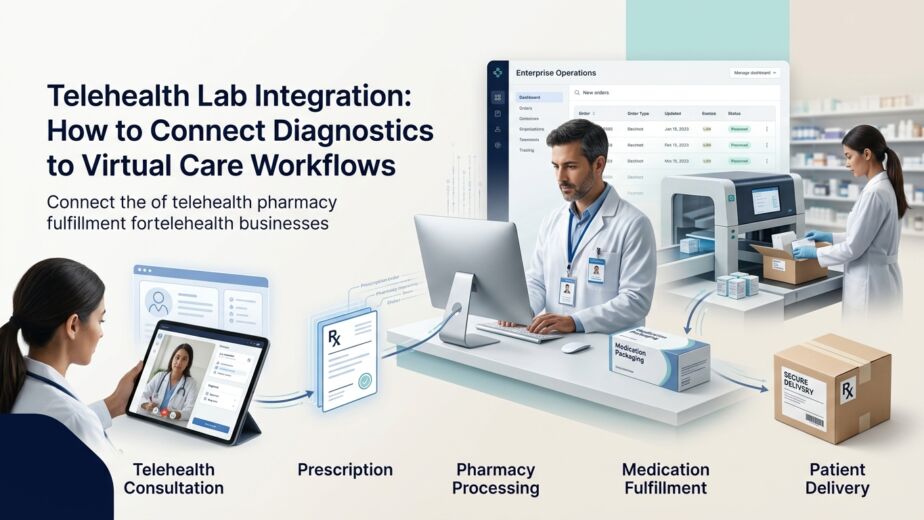
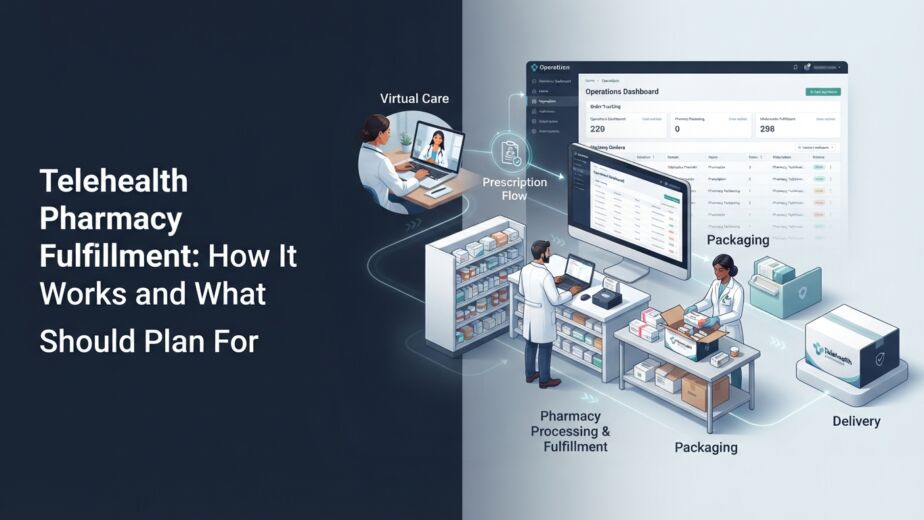
That is why telehealth patient acquisition should be planned alongside provider capacity, pharmacy fulfillment, and diagnostics. Before you scale spending in a new state, confirm that licensed clinicians, pharmacy coverage, and lab access are ready there.
Metrics That Matter Beyond Cost per Lead
Measuring the wrong thing is one of the fastest ways to waste acquisition budget. Track the full path from first click to retained patient.
| Metric | What it tells you |
|---|---|
| Cost per intake start | Efficiency of traffic and landing pages |
| Intake completion rate | Friction within the questionnaire and checkout |
| Cost per completed visit | True cost of bringing a patient to care |
| Clinical approval rate | How well targeting attracts appropriate candidates |
| Lab completion rate | Whether diagnostics workflows are slowing treatment |
| First-fill rate | Share of approved patients who receive medication |
| Refill and retention rate | Long-term program health |
| Customer acquisition cost (CAC) vs. lifetime value (LTV) | Overall unit economics |
A low approval rate often signals a targeting or messaging problem, not a clinical one. If ads attract people who do not meet clinical criteria, the funnel will look busy but produce few patients. Adjusting audiences and clarifying eligibility on landing pages can improve results without changing clinical standards.
Privacy and Tracking: A Critical Constraint
Modern acquisition depends on measurement, but healthcare data adds strict limits. This is one area where marketing teams most often need compliance input.
Key considerations include:
- HIPAA-regulated entities: HHS Office for Civil Rights guidance addresses online tracking technologies, such as pixels and analytics tools, on websites and apps of HIPAA covered entities and business associates. Health information shared with tracking vendors can raise HIPAA concerns.
- Non-HIPAA health businesses: the FTC’s Health Breach Notification Rule can apply to certain health apps and similar technologies, and the FTC has taken action involving the sharing of health data.
- State privacy laws: several states have enacted consumer health data and privacy laws with their own consent and disclosure requirements.
Practical steps include auditing every tag on intake and checkout pages, limiting data passed to advertising platforms, using server-side or privacy-preserving measurement where appropriate, and documenting vendor agreements. A privacy review before launch is far easier than unwinding data flows later.
Advertising Compliance for Telehealth Marketing
Advertising rules shape what your campaigns can say. The FTC’s Health Products Compliance Guidance explains that health-related claims generally need competent and reliable scientific evidence, and that the overall impression of an ad matters, not just its literal words.
For telehealth patient acquisition, that translates into practical guardrails:
- Do not promise that a patient will receive a specific medication. The clinician decides.
- Avoid guaranteed results or timelines.
- Use testimonials only when they are genuine, representative, and properly disclosed.
- Make pricing, subscriptions, and cancellation terms clear.
- Review before-and-after imagery carefully.
- Check prescription product references against FDA and state rules.
Requirements can vary by state and service line and should be reviewed with appropriate medical, legal, and compliance professionals before launch. Building a standing review step into your creative workflow keeps campaigns moving without cutting corners.
Scaling Acquisition Across Service Lines
Once one service line performs reliably, the same acquisition system can support additional categories. This is where operating leverage appears.
Shared assets can include:
- One brand and domain with dedicated pages per service line.
- A common intake framework with service-specific modules.
- Shared creative processes and compliance review.
- One provider network and pharmacy relationships across categories.
- Cross-service education, for example linking weight loss and metabolic health content.
Each new category still needs its own landing pages, screening questions, protocols, and creative review. The benefit is that you are not rebuilding the funnel from scratch each time.
Building In-House vs. Working With a Growth Partner
Operators approach acquisition in different ways. Some build internal teams for content, paid media, analytics, and lifecycle marketing. Others work with specialized partners. Many combine the two.
Questions to ask when deciding include:
- Does your team have healthcare advertising experience, including platform policies?
- Can your marketing data connect to clinical outcomes such as completed visits and first fills?
- Do you have privacy expertise for tracking and measurement?
- Is your acquisition plan tied to provider, pharmacy, and lab capacity?
A B2B telehealth operating and growth partner such as TelePartners Studio approaches telehealth patient acquisition as one part of a broader operating model, connecting content, creative, Meta ads, and landing pages with provider network access, pharmacy fulfillment, and lab integration. Clinical decisions remain with independent licensed clinicians.
Common Patient Acquisition Mistakes
Even experienced marketers can stumble in virtual care. Watch for these patterns:
- Optimizing for cheap leads instead of completed visits and retained patients.
- Scaling spend into states where providers or pharmacy coverage are not ready.
- Overpromising in creative, which leads to disappointed patients and compliance risk.
- Installing tracking tools without review on pages that collect health information.
- Using one landing page for every service, which weakens relevance and conversion.
- Ignoring intake drop-off, where small fixes often produce meaningful gains.
- Treating acquisition as separate from operations, so marketing outpaces capacity.
Frequently Asked Questions
What is the most effective channel for telehealth patient acquisition?
There is no single best channel. Organic search tends to deliver durable, high-intent traffic over time, while paid search and paid social offer speed and testing. Most successful operators combine channels and judge them by cost per completed visit and retention, not by clicks alone.
How do you measure the cost of acquiring a telehealth patient?
Track cost at each stage: intake start, completed intake, completed visit, and first fill. Comparing customer acquisition cost with lifetime value gives the clearest view of whether a service line is sustainable.
Can telehealth companies use Meta ads?
Yes, many do, but healthcare and prescription-related advertising is subject to platform policies that can include restrictions or certification requirements. Creative must also follow FTC and FDA rules, and tracking on health-related pages needs privacy review.
Is it legal to use tracking pixels on telehealth websites?
It depends on the type of organization, the data involved, and applicable law. HHS has issued guidance on tracking technologies for HIPAA-regulated entities, and the FTC enforces rules for certain health apps and websites. Have privacy counsel review tracking on intake and checkout pages before launch.
Why do so many patients abandon telehealth intake forms?
Common reasons include long or confusing questionnaires, unclear pricing, surprise eligibility issues late in the flow, and uncertainty about what happens next. Shorter sections, early screening questions, transparent pricing, and clear next steps usually help.
How does telehealth patient acquisition connect to pharmacy and lab operations?
Acquisition only produces value when patients complete care. Slow visits, delayed shipping, or confusing lab kits reduce completion and retention. Planning telehealth patient acquisition alongside provider capacity, pharmacy fulfillment, and diagnostics keeps growth aligned with what the operation can deliver.
Conclusion
Growth in virtual care is not just a marketing challenge. Effective telehealth patient acquisition connects channels, landing pages, intake, clinical care, pharmacy fulfillment, and lab workflows into one measurable system. The operators who grow sustainably focus on completed visits and retained patients rather than cheap leads, respect privacy and advertising rules from the start, and scale only where their clinical and fulfillment capacity is ready.
Start with one service line, measure the full funnel, fix the biggest points of drop-off, and expand from there. If you are planning a new service line or want acquisition tied directly to telehealth operations, TelePartners Studio works as a B2B telehealth operating and growth partner across patient acquisition, provider access, pharmacy fulfillment, and lab integration. A discovery call is a simple way to explore whether that model fits your goals.